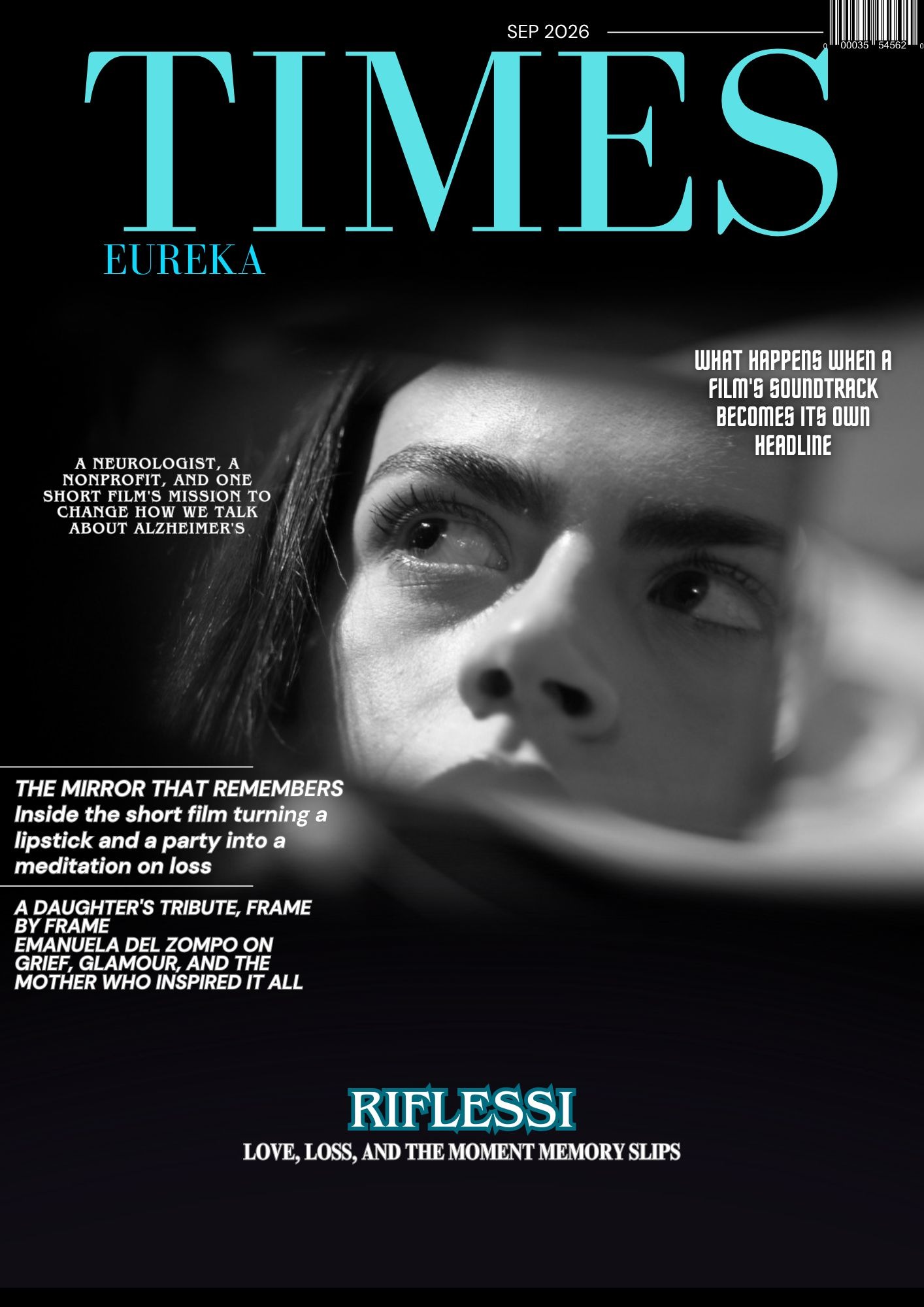
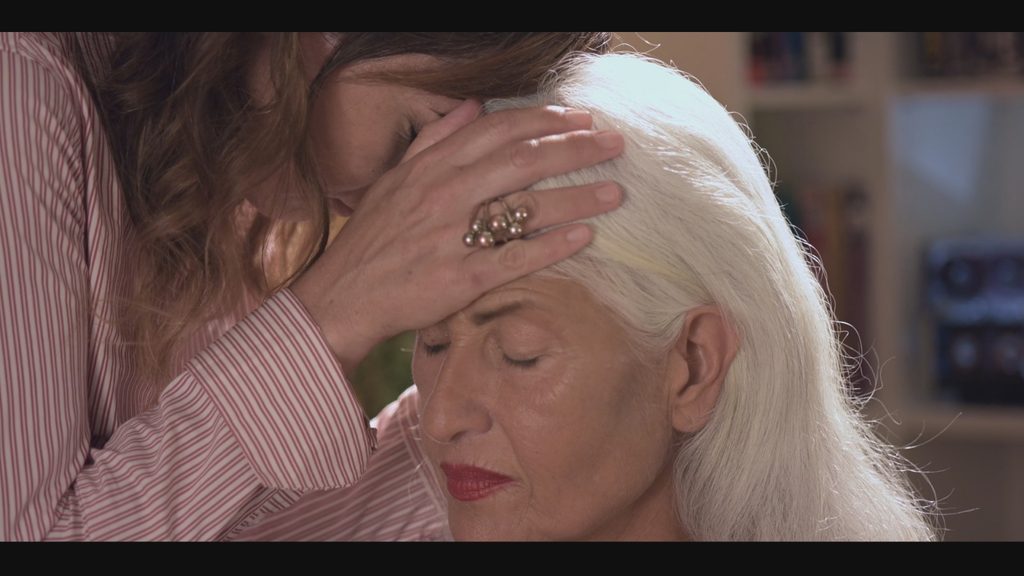
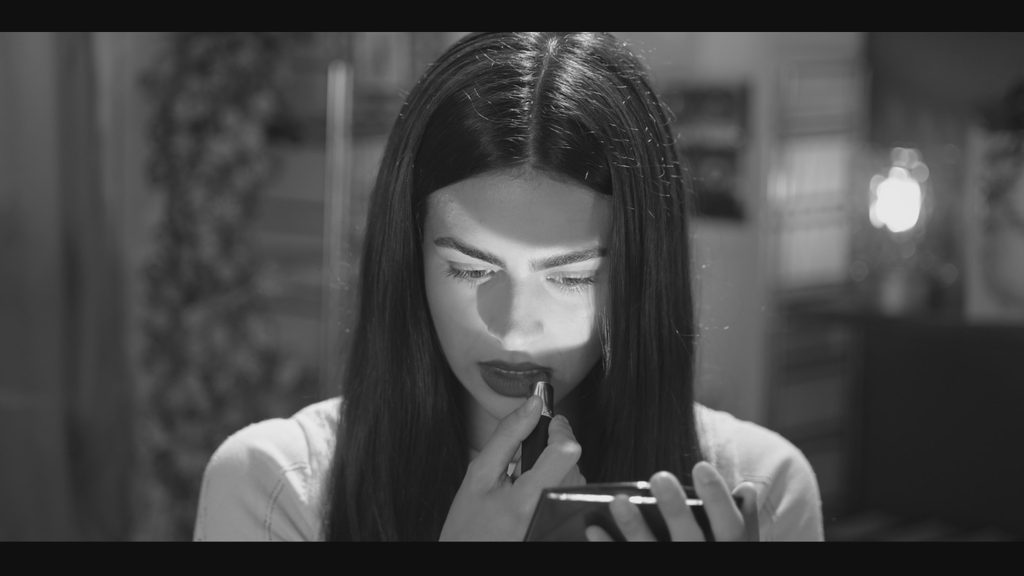
There is a mirror. There is lipstick, applied with the unhurried confidence of a woman certain of the night ahead. It’s the 1970s, the party is in full swing, and Anita leans toward the glass to finish her reflection — literally — when a woman arrives with a drink, and the mirror does something mirrors are not supposed to do. It stops showing the present. It starts showing a memory.
That single, quietly devastating image is the engine of Riflessi (“Reflections”), the short film written, directed, and produced by Emanuela Del Zompo with Piera Cuccia, shot through the lens of cinematographer Gino Sgreva and carried by a trio of performances from Anita Li Calzi, Cristina Cetoloni, and Alessia Zarrelli. It is a film about Alzheimer’s that refuses to explain the disease from the outside. Instead, it does something rarer: it lets you stand inside the moment a mind first slips its own timeline, glamour and grief occupying the same square inch of silvered glass.
Since its release, Riflessi has been quietly building the kind of festival trail that suggests a film finding exactly the audience it was made for. It screened at the London First-Time Filmmaker Sessions, Volume 9, earned an honorable mention at the Post-Cinema Film Festival, and was selected at both the Croffi Festival and Rome’s Prisma Festival. This October 10, it returns to Italy as a finalist at the Montecatini Film Festival. Its original track, “Mirror of Memories” — also directed by Del Zompo — took home the Ciak Award on June 25, 2026, extending the film’s reach from screen to soundtrack.
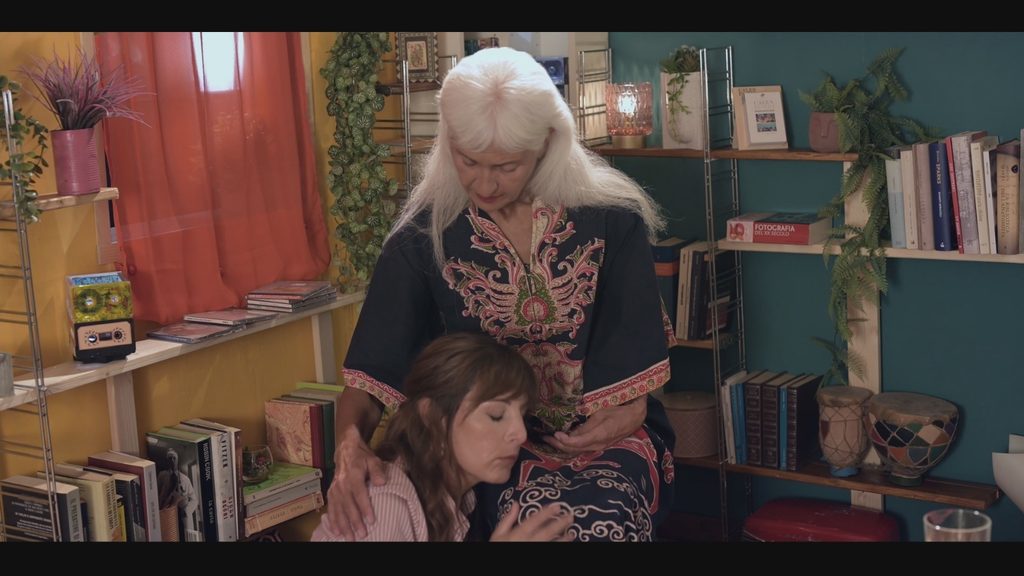
But Riflessi has never been positioned as festival decoration. It has become, deliberately, a platform. The Tota Pulchra APS-ETS Association, chaired by Mons. Jean Marie Gervais, has thrown its full institutional weight behind the project, citing its “high human, cultural, and social value.” That support crystallized at a dedicated meeting at Rome’s Salotto Tevere during the Roman Summer, where the film was presented alongside medical professionals rather than simply premiered for applause — a choice that tells you what kind of project this is meant to be.

At the center of it is a loss that is not fictional. “I dedicate this work to my mother, Giuliana Capannelli Del Zompo, who passed away on February 16, 2026, after facing Alzheimer’s disease,” Del Zompo has said. “This condition not only affects memory, but deeply involves the whole family. Alongside treatment, it is essential to provide psychological support, listening, and guidance both to the patients and to those who care for them every day.” It’s the kind of line that could sound like press-release sentiment anywhere else. Here, framed by the mirror scene that opens the film, it reads as the whole thesis.
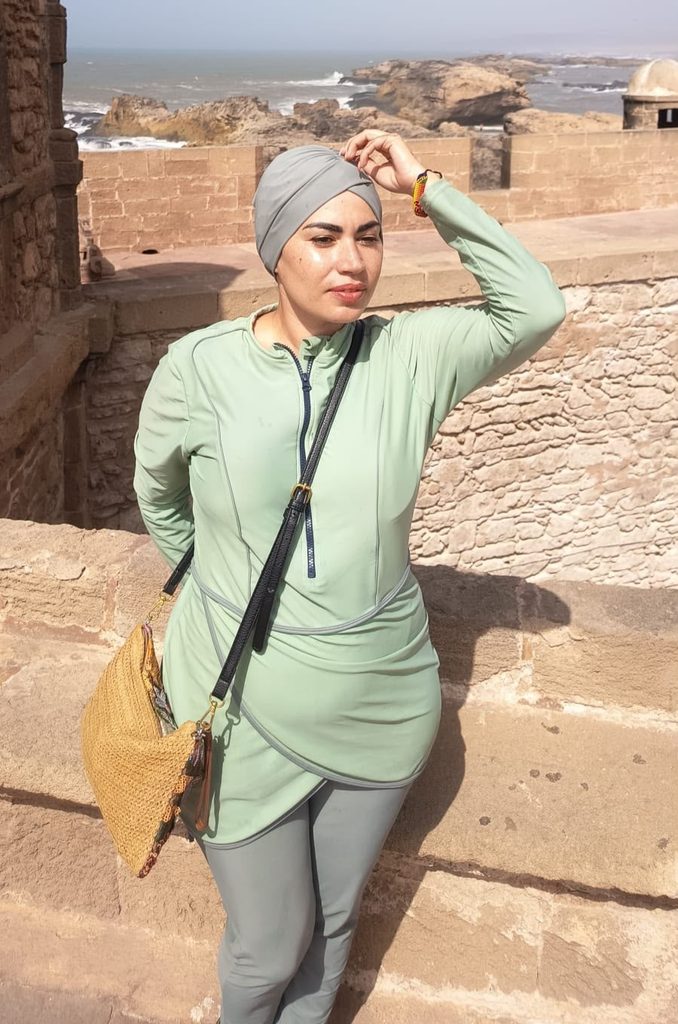
That thesis found a clinical counterpart in Dr. Mohammad Nafeli Shahrestani, a postdoctoral researcher in the Department of Neurology at the University of Miami and a graduate with honors of Rome’s Tor Vergata University, who spoke at the Roman Summer meeting on the necessity of pairing drug therapy with psychological support for patients and families. “Reflections is a short film that should be shown in schools, social centers and hospitals, accompanied by meetings with specialists,” he said. “Alzheimer’s not only affects those affected, but also those who care for them. This is why it is essential that no family is left alone.”
It’s a sentence that could serve as the film’s real distribution plan. Alzheimer’s, after all, rarely announces itself to just one person — it moves through a household, reshaping the people who remain lucid around the one who is losing that lucidity, asking them to grieve someone who is still, technically, in the room. Riflessi understands this instinctively, which is why its central metaphor is a mirror and not a diagnosis: memory loss, the film suggests, is something everyone standing near it has to look into.
As Riflessi heads to Montecatini this October, it arrives less as a short film chasing a trophy than as an argument — that cinema, at three or four minutes, can do what awareness campaigns often can’t: make you feel, for just a moment, exactly where the reflection ends and the memory begins.